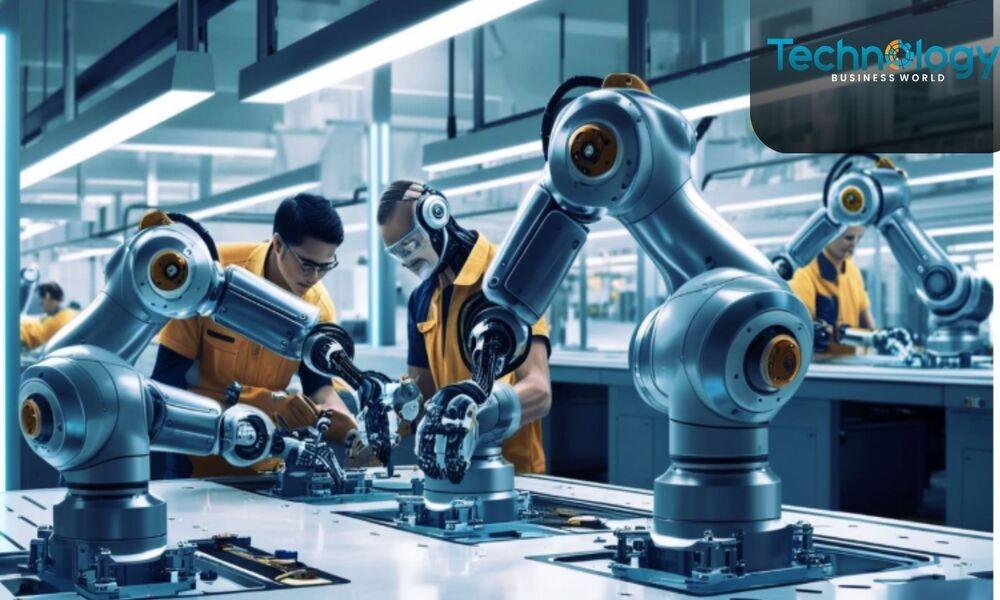
Manufacturing is going to become more autonomous, connected, and intelligent in the future. NVIDIA has released a new blueprint intended to assist manufacturers in creating autonomous factories driven by robotics, artificial intelligence, simulation technologies, and Industrial Internet of Things (IIoT) solutions. This is a major step toward smart industrial operations.
The news demonstrates how cutting-edge digital technologies are transforming production by making it possible for factories to run more effectively, anticipate maintenance requirements, streamline workflows, and save operating expenses. NVIDIA’s most recent venture shows how AI-driven innovation could reshape the future of industrial production as sectors around the world embrace digital transformation.
The Vision of NVIDIA for Self-Driving Factories
Production planning and operational management in manufacturing facilities have historically relied on human supervision and manual decision-making. But the emergence of digital twins, AI, machine learning, and connected gadgets is changing how factories operate.
These technologies are combined in NVIDIA’s blueprint to develop intelligent production settings that can make decisions in real time based on operational data.
The company’s strategy centers on combining robotics, sensors, AI models, and simulation into a single ecosystem that can continually track, evaluate, and enhance production performance.
Important Elements of NVIDIA’s Factory Design
- Operational monitoring driven by AI
- Technology for digital twin simulation
- Real-time analytics from factories
- IoT connectivity in industry
- Capabilities for predictive maintenance
- Self-sufficient robotic systems
- Improved planning and optimization of production
It is anticipated that these capabilities will assist firms in increasing productivity while lowering operational risks and downtime.
Use AI to Transform the Manufacturing Sector
The manufacturing industry is changing quickly as businesses use smart technologies to stay competitive. According to NVIDIA, AI-driven solutions have the potential to completely transform manufacturing industry operations by facilitating more efficient collaboration across machines, robotics, and software platforms.
Manufacturers can use predictive intelligence to find possible problems before they affect output, rather than responding to problems after they arise.
AI-enabled manufacturing has the following advantages:
- Higher-quality production
- Quicker decision-making
- Decreased equipment malfunctions
- Improved use of resources
- Enhanced effectiveness of operations
- Reduced upkeep expenses
These benefits are becoming more crucial for businesses looking for long-term growth as international competition heats up.
How Smart Operations Are Supported by NVIDIA Factory Planning
Advanced NVIDIA industrial planning skills are a crucial part of the project. Manual forecasting and historical data are frequently used in traditional production planning. Large volumes of data may be processed in real time by contemporary AI-powered planning systems, allowing for more precise and dynamic operational decisions.
Manufacturers can mimic production environments before making real modifications by building virtual factory models. This enables companies to assess various situations, find bottlenecks, and streamline processes without interfering with existing company activities.
AI-Based Factory Planning’s Benefits
- Production visibility in real time
- Better inventory control
- Improved distribution of workers
- Quicker reaction to consumer demand
- Decreased inefficiencies in operations
- Improved coordination of the supply chain
These skills can help businesses sustain efficiency while responding more swiftly to shifting market conditions.
Using Digital Twins to Transform Manufacturing Processes
The focus on digital twin technology in NVIDIA’s plan is one of its most intriguing features. Digital twins are virtual copies of real-world systems, facilities, or assets.
Before implementing changes in the real world, producers can use these digital models to track operations, test adjustments, and forecast results.
By assisting businesses, this technology is significantly contributing to the revolution of production processes.
- Model the workings of a factory
- Boost the performance of the equipment
- Determine the production bottlenecks
- Maximize the use of energy
- Improve safety protocols
- Quicken the cycles of innovation
As the use of digital twins increases, many experts see them as a key component of Industry 4.0 projects.
Industrial Automation and NVIDIA Manufacturing Factory Strategy
NVIDIA is becoming more and more influential in industrial industries, while being most recognized for its graphics processing units (GPUs) and artificial intelligence (AI) technology.
Providing the computing infrastructure required to support enhanced automation, robots, simulation platforms, and AI-driven decision-making is the main goal of NVIDIA’s larger manufacturing factory plan.
NVIDIA seeks to expedite the global adoption of autonomous manufacturing solutions through collaborations with manufacturers, software developers, robotics firms, and industrial technology suppliers.
Technologies Driving Self-Driving Manufacturing
Robotics, edge computing, artificial intelligence (AI), machine learning, industrial IoT (IIoT), and digital twins
Real-Time Analytics with High-Performance Computing
When combined, these technologies lay the groundwork for manufacturing environments of the future.
Transforming Sectors Other Than Manufacturing
Beyond production floors, NVIDIA’s plan has an impact. Similar technologies are already transforming a number of industries, including retail, healthcare, logistics, transportation, and energy.
Organizations may increase operational visibility, automate tedious operations, and improve decision-making in a variety of business contexts by integrating AI with connected infrastructure.
As businesses continue to engage in digital transformation plans, industry observers predict autonomous systems will be crucial to future economic success.
Smart Manufacturing’s Future
An important turning point in the development of industrial automation is represented by NVIDIA’s most recent blueprint. AI-powered manufacturing processes are becoming a more appealing option as manufacturers look for more scalability, robustness, and efficiency.
NVIDIA is contributing to the development of a future in which factories function with previously unheard-of intelligence and precision by fusing cutting-edge technologies like AI, digital twins, robotics, and Industrial IoT.
Autonomous factory ecosystems may emerge as a key component of the next wave of industrial innovation as the manufacturing industry continues its digital revolution.
Read our latest Interview with Dr. Shaheela Banu Abdul Majeed