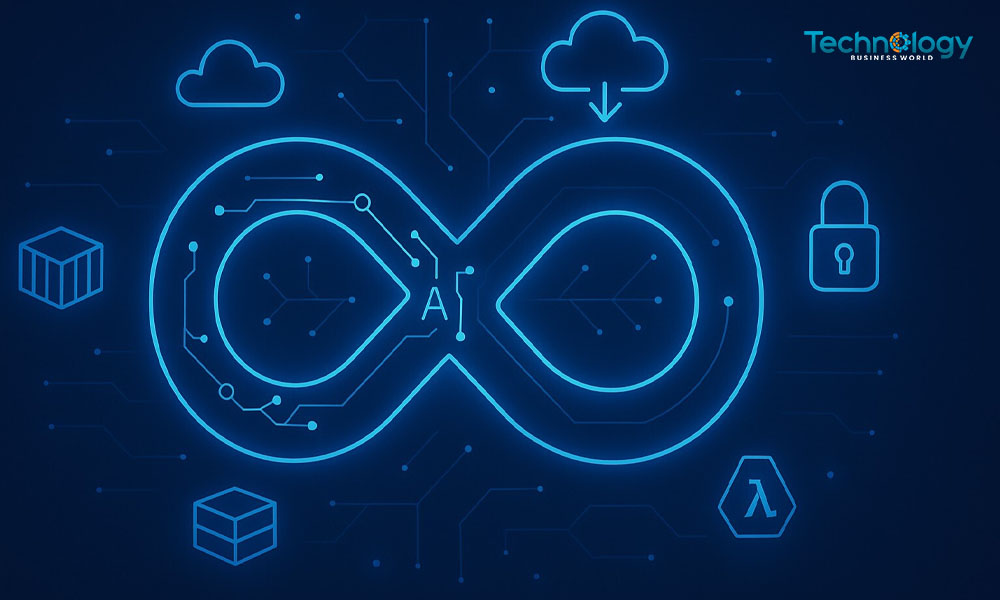
The evolution of DevOps has been one of the most transformative journeys in modern software development. What began as a cultural and operational shift to bridge the gap between development and operations has now matured into a highly automated, intelligent ecosystem. Today, with the rise of artificial intelligence (AI), machine learning (ML), and advanced automation, the question is no longer about optimizing DevOps—but whether we are entering the era of autonomous development.
DevOps initially focused on improving collaboration, accelerating release cycles, and ensuring continuous integration and continuous delivery (CI/CD). Over time, tools and platforms from companies like GitHub, GitLab, and Atlassian streamlined workflows and introduced automation into testing, deployment, and monitoring. These innovations significantly reduced human error and increased development speed.
However, the next phase of DevOps is being driven by intelligent automation. AI-powered tools can now analyze code, detect vulnerabilities, suggest fixes, and even generate code snippets. This shift is paving the way for autonomous pipelines where systems can make decisions with minimal human intervention. For instance, automated testing frameworks can identify bugs, prioritize them based on severity, and trigger fixes or rollbacks without requiring manual input.
One of the key pillars of this transformation is self-healing infrastructure. Modern cloud platforms such as Amazon Web Services and Microsoft Azure are enabling systems that can automatically detect failures and recover in real time. Whether it’s scaling resources during peak demand or rerouting traffic during outages, these systems are becoming increasingly autonomous, reducing downtime and improving reliability.
Another major advancement is the integration of AIOps (Artificial Intelligence for IT Operations). AIOps platforms leverage machine learning to analyze massive volumes of operational data, predict incidents, and recommend proactive solutions. This allows organizations to move from reactive troubleshooting to predictive and preventive operations. As a result, DevOps teams can focus more on innovation rather than routine maintenance.
Despite these advancements, fully autonomous development is still a work in progress. Human expertise remains critical in areas such as architecture design, ethical decision-making, and complex problem-solving. While AI can assist in coding and operations, it lacks the contextual understanding and creativity that human developers bring to the table.
Security is another important consideration. As automation increases, so does the potential attack surface. Ensuring secure pipelines, safeguarding sensitive data, and maintaining compliance are essential challenges that organizations must address while adopting autonomous systems.
Looking ahead, the convergence of DevOps, AI, and cloud-native technologies is set to redefine software development. The future may see autonomous DevOps pipelines that can write, test, deploy, and optimize code with minimal human oversight. Organizations that embrace this shift will benefit from faster innovation cycles, improved efficiency, and reduced operational costs.
In conclusion, while we are not yet in a fully autonomous development era, the trajectory is clear. DevOps is evolving from automation to intelligence, and eventually toward autonomy. The organizations that successfully balance automation with human insight will lead the next wave of digital transformation.