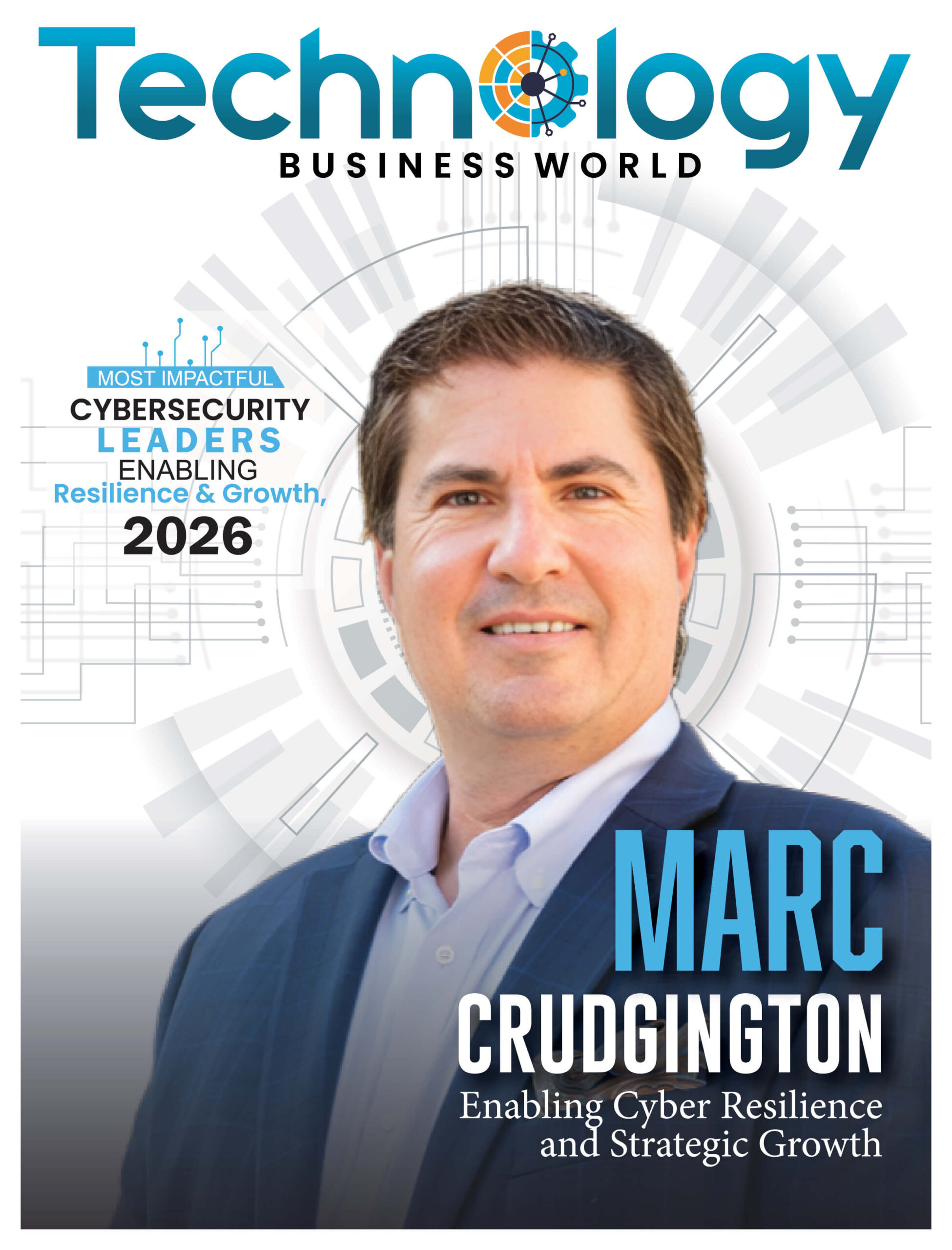
Marc Crudgington’s career reflects the evolution of technology itself from foundational infrastructure to the complex, AI-driven digital ecosystems shaping today’s world. With over twenty-five years of experience across cybersecurity, cloud, and enterprise technology leadership, he has built a reputation for aligning security with business strategy, ensuring that organizations do not just operate, but operate with confidence.
As a leader who has held roles including CISO, CIO, and CTO, and now serving as VP of IT Infrastructure and Cybersecurity alongside his role as Founder and CEO of Armida Corporation, Marc has consistently approached cybersecurity not as a technical constraint, but as a strategic enabler of resilience and growth. His journey offers a deeper look into how modern organizations must rethink security, leadership, and innovationin an increasingly interconnected and rapidly evolving digital landscape.
A Journey Shaped by Technology, Security, and Strategic Vision
Marc Crudgington’s professional journey began with a realization that technology was far more than a collection of systems and software. From the outset, he understood that technology serves as the backbone of modern organizations, enabling them to operate efficiently, innovate continuously, and compete in an increasingly digital world.
His early career experiences spanned both startup environments and larger corporate organizations, providing him with a deep understanding of the foundational infrastructure that supports enterprise operations. These formative years exposed him to the complexities of system architecture, networking, and operational scalability. More importantly, they revealed the critical role technology plays in ensuring organizational continuity and performance.
As his career progressed, he transitioned into leadership roles that combined infrastructure oversight with cybersecurity strategy. Positions such as Chief Information Security Officer, Vice President of IT Infrastructure and Cybersecurity, and other executive leadership roles expanded his scope from managing systems to safeguarding organizations, customers, and critical information assets. These roles allowed him to witness firsthand how digital transformation, cloud adoption, and distributed infrastructure were reshaping industries across the globe.
Working across diverse environments, including startups, consulting firms, and large multinational enterprises, reinforced a consistent lesson. Technology and cybersecurity cannot function in isolation. They must operate as strategic enablers of business success. Organizations that treat cybersecurity as an afterthought or a purely technical function often struggle to build resilience, while those that integrate security into their strategic framework gain a competitive advantage.
Education and continuous learning have played a pivotal role in his journey. His MBA from the University of California, Irvine’s Paul Merage School of Business provided a strong foundation in aligning technology decisions with business outcomes. Currently pursuing a Master of Science in Technology Commercialization at The University of Texas at Austin’s McCombs School of Business, he continues to deepen his understanding of how emerging technologies transition from innovation to market impact.
Beyond his professional roles, Marc has contributed to the broader cybersecurity community through thought leadership and authorship. His books, including The Cyber War Is Here, examine the evolving nature of global digital conflict and its implications for modern enterprises. These contributions reflect his commitment not only to advancing cybersecurity practices but also to shaping the conversation around digital resilience.
Today, his work focuses on building world-class infrastructure, developing cybersecurity strategies, and helping organizations navigate the next era of transformation driven by artificial intelligence, data, and autonomous systems.
The Expanding Threat Landscape in a Hyperconnected World
Modern organizations operate in an environment defined by hyperconnectivity, cloud expansion, and rapid technological advancement. These factors, while enabling innovation and efficiency, also introduce significant cybersecurity challenges.
One of the most pressing challenges is the expansion of the digital attack surface. Organizations now rely on complex ecosystems that include cloud platforms, software-as-a-service applications, edge computing environments, and globally distributed networks. This interconnected infrastructure creates multiple entry points for potential threats, making it increasingly difficult to manage identity, access, and data protection effectively.
At the same time, cyber adversaries have evolved in both sophistication and scale. Threat actors are no longer isolated individuals but often well-organized, well-funded groups, sometimes supported by nation-states. These adversaries leverage automation and artificial intelligence to conduct reconnaissance, identify vulnerabilities, and execute attacks at unprecedented speed.
The rise of generative and agentic artificial intelligence systems introduces another layer of complexity. While these technologies offer immense potential for innovation and productivity, they also present new risks. Data exposure, manipulation of AI models, and the emergence of autonomous decision-making systems create challenges that traditional security frameworks are not fully equipped to address.
The future of cybersecurity depends on integrating security deeply into infrastructure design, governance frameworks, and enterprise risk management strategies. Organizations must move beyond reactive approaches and adopt proactive, architecture-driven security models that address the complexities of modern digital ecosystems.
Leadership as the Foundation of Cybersecurity Culture
In Marc’s perspective, leadership is the most critical factor in building a strong cybersecurity culture within organizations. Technology alone cannot address the complexities of modern security challenges. Culture determines whether security practices are consistently applied and whether employees understand their role in protecting organizational assets.
Effective cybersecurity leadership begins with aligning security initiatives with business objectives. When leaders communicate that cybersecurity supports innovation, customer trust, and organizational growth, it becomes integrated into the company’s mission rather than perceived as a constraint.
Building a resilient cybersecurity culture also requires fostering collaboration across different functions. Technology teams, business leaders, and risk management professionals must work together to address security challenges. Cybersecurity cannot operate as a siloed function. It must be embedded across the organization as a shared responsibility.
Talent development is another critical aspect of leadership. The global shortage of cybersecurity professionals remains a significant challenge. While artificial intelligence can help address certain gaps, organizations must invest in training, mentorship, and continuous learning to build a skilled workforce capable of adapting to evolving threats.
Technologies Shaping the Future of Cybersecurity
The future of cybersecurity and IT governance will be shaped by several emerging technologies, each introducing new opportunities and challenges.
Artificial intelligence is at the forefront of this transformation. AI-powered security systems enable faster detection of anomalies and automated responses to threats. At the same time, adversaries are increasingly using AI to enhance their attack capabilities, creating a dynamic environment where both defenders and attackers leverage advanced technologies.
Generative and agentic AI systems are transforming enterprise workflows by enabling autonomous decision-making processes. These systems require robust governance frameworks to ensure transparency, accountability, and security. Organizations must establish controls that address the unique risks associated with AI-driven operations.
Edge computing is another significant development, particularly in industries that require real-time data processing, such as logistics, manufacturing, and healthcare. As computing power moves closer to devices and sensors, securing edge infrastructure becomes a critical priority.
Looking further ahead, quantum computing has the potential to disrupt existing cryptographic systems. Although large-scale quantum capabilities are still in development, organizations must begin preparing for post-quantum cryptographic standards to protect sensitive data against future threats.
These technological advancements require a fundamental shift in how organizations approach cybersecurity governance. Security must be integrated into the design phase of technology systems rather than being added as an afterthought.
Integrating Cybersecurity into Business Strategy
Many organizations struggle to integrate cybersecurity into their overall business strategy because they view it primarily as a technical function. Marc emphasizes that cybersecurity must be positioned as a strategic capability that supports organizational resilience and growth.
This integration begins at the executive level. Leaders must recognize that cybersecurity investments are not merely operational costs but essential components of digital trust. Aligning cybersecurity programs with business objectives and risk management frameworks ensures that security initiatives contribute directly to organizational success.
Effective communication is also critical. Security leaders must translate technical risks into business terms that resonate with executive leadership. Concepts such as risk exposure, operational continuity, and regulatory compliance help bridge the gap between technical and business perspectives.
Adopting modern security architectures further supports this integration. Technologies such as Zero Trust, Secure Access Service Edge, software-defined wide-area networks, biometrics, and just-in-time access controls enable organizations to build resilient environments that support digital transformation.
Ultimately, successful cybersecurity strategies rely on collaboration across all levels of the organization, embedding security into everyday operations rather than treating it as a separate function.
Building the Next Generation of Cybersecurity Leaders
For young professionals aspiring to build careers in cybersecurity and technology leadership, Marc emphasizes the importance of developing a strong foundation in technical and analytical skills.
Understanding networking, cloud computing, and system architecture is essential for identifying vulnerabilities and designing secure systems. Analytical and critical thinking skills enable professionals to evaluate evolving threats and adapt to new technologies.
However, technical expertise alone is not sufficient. Communication and leadership skills are equally important. Cybersecurity professionals must be able to explain complex technical concepts in ways that stakeholders and executives can understand.
A commitment to lifelong learning is critical in a rapidly evolving field. Emerging technologies such as artificial intelligence, edge computing, and advanced analytics require continuous education and adaptation. Developing expertise in these areas will be essential for future success.
The Importance of Global Collaboration
Cybersecurity is inherently a global challenge. Threats do not respect geographic boundaries, and adversaries often operate across international networks.
Collaboration among governments, industry leaders, and cybersecurity professionals is essential for sharing threat intelligence and strengthening defenses. Public-private partnerships play a significant role in this effort by enabling coordinated responses to emerging threats.
Global standards and regulatory frameworks also contribute to establishing consistent security practices across industries and regions. By working together, organizations and nations can build more resilient digital ecosystems capable of withstanding complex cyber threats.
Motivation and Purpose in Cybersecurity Leadership
Marc’s motivation to continue driving innovation in cybersecurity stems from a desire to build a secure digital future. Technology is transforming every aspect of society, from commerce to healthcare to critical infrastructure. Ensuring that these systems operate securely is a responsibility shared by technology leaders worldwide.
Mentorship is another key motivator. Supporting the next generation of technology leaders helps ensure that the industry continues to evolve and adapt to new challenges. Collaboration and knowledge sharing remain essential components of progress in cybersecurity.
The rapid advancement of technologies such as artificial intelligence and advanced analytics presents both challenges and opportunities. Helping organizations harness these technologies securely allows them to solve complex problems and create new value.
Maintaining Balance in a High-Demand Field
Balancing professional responsibilities with personal well-being is essential in a demanding field like cybersecurity. Marc emphasizes the importance of spending time with family and disconnecting from technology to maintain perspective.
Activities such as live music, exercise, outdoor pursuits, and engaging with new ideas contribute to maintaining balance and creativity. Writing and thought leadership provide opportunities to reflect on broader industry trends and share insights with a wider audience.
Travel and exposure to diverse cultures offer valuable perspectives on how technology influences different societies, enriching both personal and professional understanding.
A Message for the Future of Technology Leadership
As the world enters a transformative era driven by artificial intelligence, autonomous systems, and advanced computing technologies, the role of cybersecurity and technology leaders becomes increasingly significant.
Marc encourages aspiring professionals to think beyond individual technologies and focus on understanding how systems interact. Effective leaders must integrate knowledge across infrastructure, data, security, and business strategy.
Curiosity, adaptability, and continuous learning are essential qualities for navigating the rapidly evolving technology landscape. Equally important is recognizing that technology leadership ultimately centers on people.
The systems designed today will influence organizations, governments, and communities around the world. Technology leaders carry the responsibility of ensuring that innovation is developed and deployed responsibly, securely, and with long-term societal impact in mind.
For those willing to embrace this responsibility, the future of cybersecurity and technology leadership offers unprecedented opportunities to shape how innovation and human progress evolve together in the digital age.
For Print and Design Purpose:
Quotes:
“Leadership, and perhaps the business executive leadership team, is the single most important factor in building a resilient cybersecurity culture.”
“Generative AI and agentic AI systems will transform enterprise workflows by enabling autonomous decision-making.”
“Technology and cybersecurity are fields where collaboration and knowledge sharing are essential.”