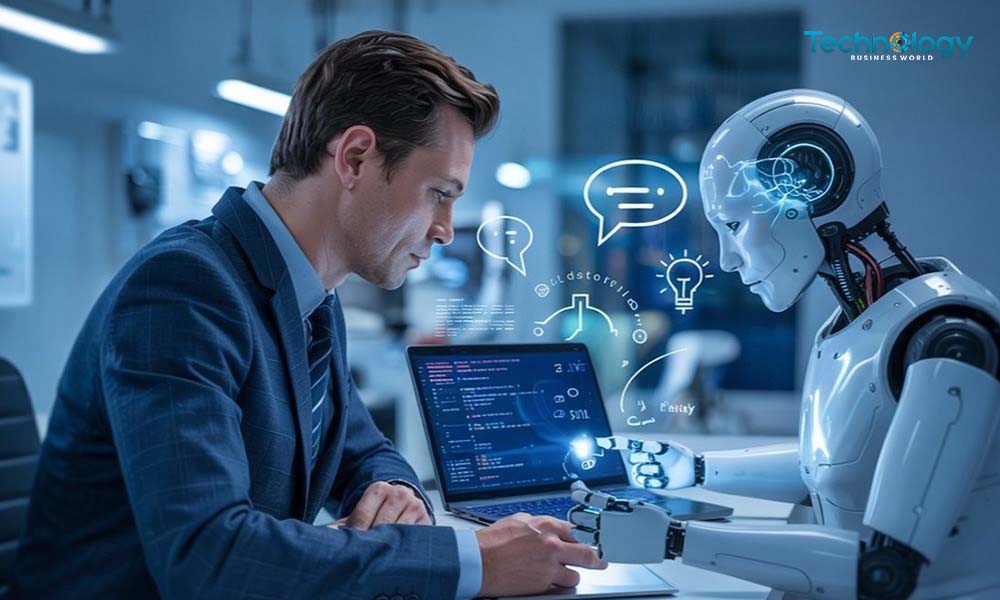
As artificial intelligence continues to advance at a remarkable pace, the debate around AI versus human intelligence has become one of the defining discussions of 2026. From boardrooms and research labs to classrooms and creative industries, organizations are questioning whether AI will compete with human capabilities or ultimately collaborate with them. The reality emerging today suggests that the future may not be a battle between humans and machines, but a powerful partnership that reshapes how work is done.
Artificial intelligence has already demonstrated its ability to process massive datasets, automate repetitive tasks, and generate insights at speeds far beyond human capability. Businesses are increasingly relying on AI systems to support decision-making, predict market trends, and streamline operations. In many industries, AI tools are becoming an integral part of daily workflows, functioning almost like digital coworkers rather than simple software tools. Experts predict that workplaces will soon operate through “connected intelligence,” where humans, data, and AI agents collaborate seamlessly to drive productivity and innovation.
However, the growing presence of AI has also sparked concerns about competition between machines and humans. Some jobs—particularly routine administrative roles—are expected to decline as automation becomes more sophisticated. Recent workforce surveys suggest that AI could gradually replace certain clerical tasks, while highly skilled professionals who learn to work with AI will remain in strong demand. This shift is forcing workers and organizations alike to rethink the nature of talent and the skills required for the future economy.
Despite these concerns, many technology leaders believe the real value of AI lies in collaboration rather than replacement. AI excels at analyzing data, identifying patterns, and optimizing processes, but it lacks human qualities such as creativity, emotional intelligence, ethical reasoning, and cultural understanding. These uniquely human abilities remain essential in areas like leadership, strategic thinking, innovation, and relationship-building. As a result, the most effective systems in 2026 are those that combine machine precision with human judgment.
Research also shows that hybrid human–AI teams often outperform either humans or machines working alone. AI can provide rapid insights and suggestions, while humans evaluate context, interpret meaning, and make final decisions. This synergy allows organizations to solve complex problems more efficiently while preserving the human perspective that drives long-term value.
At the same time, AI adoption is reshaping workplace dynamics. Employees are increasingly expected to manage and collaborate with AI tools as part of their daily responsibilities. Rather than replacing workers entirely, AI is transforming roles—turning employees into supervisors of digital agents that assist with research, analysis, and operational tasks.
Ultimately, the question of AI versus human intelligence may be the wrong one to ask. The real challenge for businesses and societies in 2026 is learning how to integrate both forms of intelligence effectively. Organizations that treat AI as a collaborative partner—rather than a competitor—are more likely to unlock new levels of productivity, creativity, and innovation.
In the years ahead, success will not depend on whether humans or machines are smarter. Instead, it will depend on how well they work together.