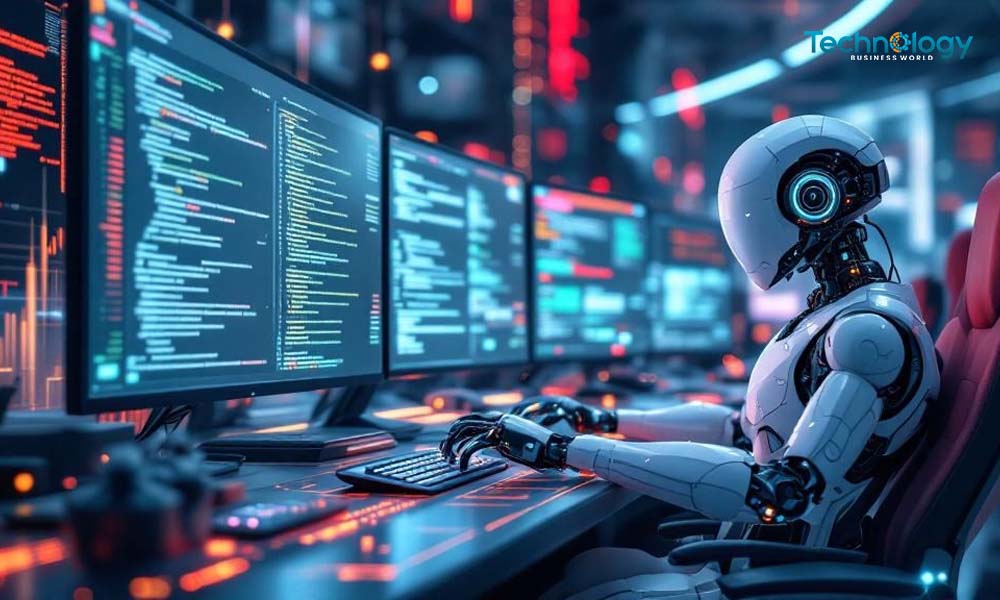
AI vs Human Intelligence: Collaboration or Competition in 2026?

As artificial intelligence continues to advance at a remarkable pace, the debate around AI versus human intelligence has become one of the defining discussions of 2026. From boardrooms and research labs to classrooms and creative industries, organizations are questioning whether AI will compete with human capabilities or ultimately collaborate with them. The reality emerging today suggests that the future may not be a battle between humans and machines, but a powerful partnership that reshapes how work is done.

Artificial intelligence has already demonstrated its ability to process massive datasets, automate repetitive tasks, and generate insights at speeds far beyond human capability. Businesses are increasingly relying on AI systems to support decision-making, predict market trends, and streamline operations. In many industries, AI tools are becoming an integral part of daily workflows, functioning almost like digital coworkers rather than simple software tools. Experts predict that workplaces will soon operate through “connected intelligence,” where humans, data, and AI agents collaborate seamlessly to drive productivity and innovation.

However, the growing presence of AI has also sparked concerns about competition between machines and humans. Some jobs—particularly routine administrative roles—are expected to decline as automation becomes more sophisticated. Recent workforce surveys suggest that AI could gradually replace certain clerical tasks, while highly skilled professionals who learn to work with AI will remain in strong demand. This shift is forcing workers and organizations alike to rethink the nature of talent and the skills required for the future economy.

Despite these concerns, many technology leaders believe the real value of AI lies in collaboration rather than replacement. AI excels at analyzing data, identifying patterns, and optimizing processes, but it lacks human qualities such as creativity, emotional intelligence, ethical reasoning, and cultural understanding. These uniquely human abilities remain essential in areas like leadership, strategic thinking, innovation, and relationship-building. As a result, the most effective systems in 2026 are those that combine machine precision with human judgment.

Research also shows that hybrid human–AI teams often outperform either humans or machines working alone. AI can provide rapid insights and suggestions, while humans evaluate context, interpret meaning, and make final decisions. This synergy allows organizations to solve complex problems more efficiently while preserving the human perspective that drives long-term value.

At the same time, AI adoption is reshaping workplace dynamics. Employees are increasingly expected to manage and collaborate with AI tools as part of their daily responsibilities. Rather than replacing workers entirely, AI is transforming roles—turning employees into supervisors of digital agents that assist with research, analysis, and operational tasks.

Ultimately, the question of AI versus human intelligence may be the wrong one to ask. The real challenge for businesses and societies in 2026 is learning how to integrate both forms of intelligence effectively. Organizations that treat AI as a collaborative partner—rather than a competitor—are more likely to unlock new levels of productivity, creativity, and innovation.

In the years ahead, success will not depend on whether humans or machines are smarter. Instead, it will depend on how well they work together.

Is Artificial Intelligence Replacing Strategy or Redefining It?

Artificial Intelligence (AI) has become a powerful force in modern business, transforming how organizations operate, compete, and grow. As AI continues to evolve, a key question emerges: Is it replacing traditional strategy, or redefining it for a new era?

Historically, strategy was built on human expertise, intuition, and long-term planning. Leaders relied on experience, market research, and historical data to make decisions that would guide their organizations for years. Today, AI can analyze vast datasets in seconds, identify patterns, and generate predictive insights with remarkable accuracy. This has led to concerns that machines may eventually take over strategic decision-making.

However, AI is not replacing strategy—it is reshaping it. Instead of eliminating the need for human strategists, AI enhances their ability to make smarter, faster, and more informed decisions. One of AI’s greatest strengths lies in predictive analytics. Businesses can now anticipate customer needs, market shifts, and potential risks before they occur. This shift allows organizations to move from reactive to proactive strategies, gaining a competitive edge in fast-changing markets.

Another major transformation is the speed of execution. Traditional strategy cycles, often planned annually or quarterly, are no longer sufficient in today’s dynamic environment. AI enables real-time monitoring and continuous optimization, allowing businesses to adjust strategies instantly based on current data. This agility has become a defining factor for success.

Despite these advancements, AI cannot replace the human aspects of strategy. Vision, creativity, ethical reasoning, and emotional intelligence remain uniquely human strengths. Strategic decisions often involve ambiguity, cultural understanding, and long-term vision—areas where human judgment is essential. AI may provide data-driven recommendations, but leaders must interpret these insights and align them with broader organizational goals.

Furthermore, implementing AI itself requires strategic thinking. Organizations must decide where and how to integrate AI, manage risks, and ensure responsible use of technology. Without clear direction, even the most advanced AI systems can fail to deliver meaningful value.

In essence, strategy is evolving from static planning to dynamic decision-making. Leaders are no longer just planners; they are orchestrators of technology, data, and human insight. The most successful organizations are those that strike the right balance—leveraging AI for efficiency and insight while relying on human intelligence for vision and purpose.

Ultimately, AI is not replacing strategy; it is elevating it. By combining the power of artificial intelligence with human judgment, businesses can create more resilient, adaptive, and forward-thinking strategies in an increasingly complex world.

The AI Arms Race: Who Will Lead the Next Global Tech War?

Artificial Intelligence has rapidly transformed from a promising technological innovation into the centerpiece of a global strategic competition. Nations across the world are investing billions into AI research, infrastructure, and talent acquisition, fueling what many analysts are calling the next global tech arms race. Much like the space race of the 20th century, leadership in AI is now widely viewed as a defining factor in determining economic power, military superiority, and geopolitical influence in the decades ahead.

At the forefront of this race are major global powers including the United States, China, and the European Union, each pursuing distinct strategies to dominate the rapidly evolving AI landscape. The United States continues to lead in cutting-edge innovation, supported by a vibrant ecosystem of technology giants and startups such as OpenAI, Google, Microsoft, and NVIDIA. With advanced research institutions and venture capital backing breakthrough technologies, the U.S. remains a global hub for AI development.

Meanwhile, China has taken a state-driven approach, integrating artificial intelligence into national strategic planning. The country has rapidly expanded its AI capabilities through heavy government investment, extensive data infrastructure, and support for technology giants like Baidu, Alibaba Group, and Tencent. Beijing’s ambition to become the world leader in AI by the end of the decade reflects how critical the technology has become for economic competitiveness and national security.

The European Union, on the other hand, is positioning itself as a leader in ethical and regulatory frameworks governing artificial intelligence. Initiatives such as the European Union AI Act aim to ensure that AI technologies are developed responsibly, balancing innovation with strong protections for privacy, safety, and human rights. By shaping global AI governance, Europe hopes to influence how the technology evolves worldwide.

Beyond economic growth, AI is increasingly viewed as a strategic military asset. Governments are exploring its use in cybersecurity, autonomous defense systems, intelligence analysis, and advanced battlefield technologies. This has raised concerns among policymakers and experts about the risks of an uncontrolled technological escalation. Unlike traditional arms races, AI development is largely driven by private companies and research institutions, blurring the lines between commercial innovation and national security.

At the same time, the race for AI leadership is also becoming a race for talent and infrastructure. Countries are competing to attract the world’s best engineers, researchers, and data scientists while building powerful computing capabilities and semiconductor supply chains. Advanced chips produced by companies like NVIDIA have become critical resources in the development of next-generation AI systems.

However, the future of the AI race may not be determined by a single nation alone. Increasing collaboration between governments, universities, and global technology companies suggests that innovation will continue to emerge from interconnected ecosystems rather than isolated national efforts.

As artificial intelligence reshapes industries, economies, and global power structures, the question is no longer whether AI will define the future—but who will lead it. The outcome of this technological competition could shape the geopolitical landscape of the 21st century, making the AI arms race one of the most consequential contests of our time.